

Night Guards for Business Parks: A Practical Way to Reduce Overnight Risk
Night Guards for Business Parks: A Practical Way to Reduce Overnight Risk
Business parks can contain multiple tenancies, varied opening patterns and shared routes that become difficult to supervise once offices close.
Risk often increases when a site falls quiet. Empty car parks, dark perimeters, reduced staffing and slower escalation can all create opportunities for theft, trespass, vandalism and anti-social behaviour. Night guarding helps businesses bridge the gap between closing time and the next working day.
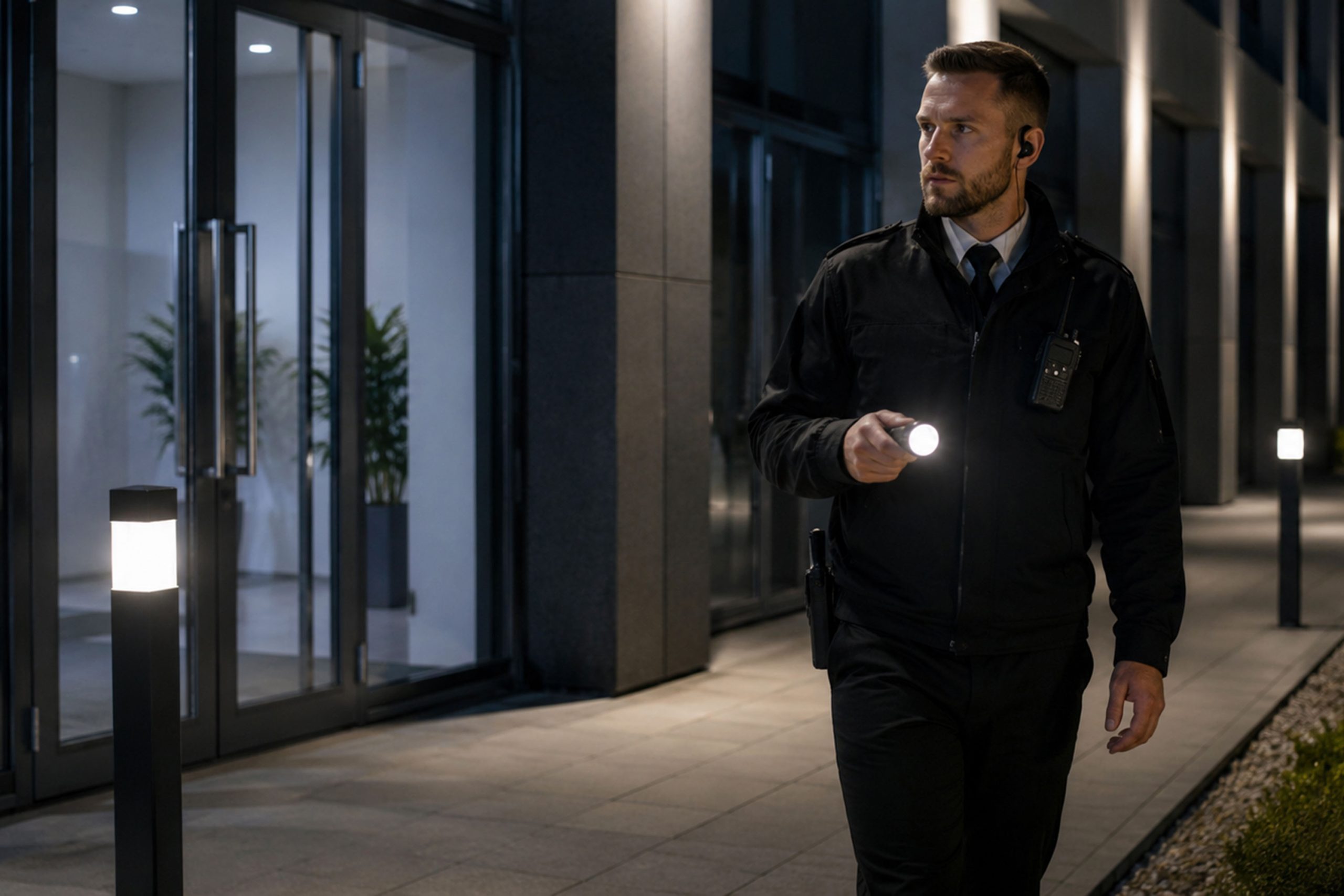
Night guards can carry out patrols, identify suspicious activity, monitor vehicle movements and report issues before they escalate into a loss or insurance claim.
Where overnight risk tends to build
A visible overnight presence often improves reassurance for tenants returning early or leaving late.
- Assess which areas become vulnerable once the site is quiet, including rear access points, dark perimeters, yards, roller shutters and vehicle gates.
- Use patrol patterns and officer positioning to create unpredictability while still covering the site consistently.
- Agree escalation and communication procedures in advance so suspicious activity is handled quickly and appropriately.
- Treat reporting as part of the value of the service, because overnight issues often reveal wider weaknesses in the site operation.
What effective night guarding looks like
Night guarding is most effective when it sits within a wider security plan that includes site procedures, escalation routes and, where appropriate, support from broader security services.
Buyers usually get the best result when expectations are clear from the start. That means defining priorities, agreeing reporting standards and making sure the service reflects how the site or event actually operates. Security should never feel generic when the risks, audiences and operational pressures are specific.
In practical terms, good delivery is visible, proportionate and well managed. It protects people and property while supporting the wider experience of staff, visitors, guests, residents, contractors or members of the public. It also creates a stronger paper trail when incidents occur, which can help with reviews, accountability and insurance questions.
How McKenzie Arnold Group can support you
McKenzie Arnold Group provides night guards for businesses for businesses that need visible overnight protection, clear reporting and a professional response to out-of-hours risk. The service can be tailored for commercial premises, retail environments, compounds and other higher-risk sites.
If you are reviewing your requirements, the next sensible step is to explore the relevant service pages for security services and then contact our team. A short conversation at the planning stage often makes it easier to scope a realistic, proportionate solution.
Frequently asked questions
What is the benefit of a night guard compared with relying only on alarms?
A night guard provides observation, deterrence and immediate decision-making on site, rather than waiting for an alarm to activate and then responding after the event.
Which businesses benefit most from overnight security?
Retailers, warehouses, industrial units, compounds, vacant premises and sites with valuable assets or repeat incidents often benefit from a visible overnight presence.
Need support with night guards for business parks? Contact McKenzie Arnold Group on 01376 350 999, email info@mckenziearnold.com or use the contact page to discuss your requirements.

When Manned Guarding Is Better Than Remote Monitoring for Commercial Premises
When Manned Guarding Is Better Than Remote Monitoring for Commercial Premises
Remote systems can be useful, but they cannot challenge a trespasser, reassure staff at the gate or make a judgment call on the ground when the site conditions change.
For many businesses, the real cost of poor security is not limited to a single incident. It can mean disruption, insurance claims, reputational damage, frustrated staff and a constant feeling that the site is exposed. A well-managed manned guarding service gives businesses visible reassurance as well as practical control.
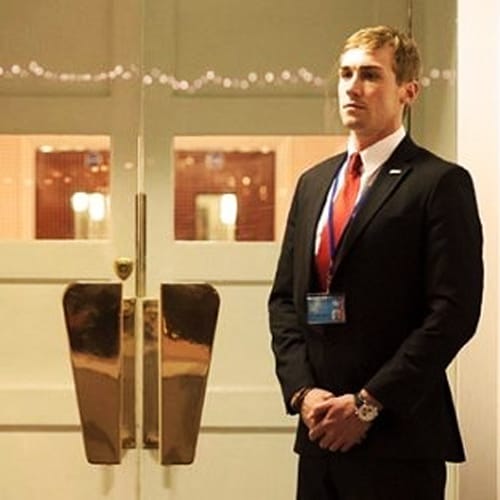
A trained officer provides immediate presence, observation, reporting and intervention in a way that technology alone cannot replicate.
Where businesses often feel exposed
The right answer is often a blended approach, but manned guarding becomes particularly valuable where there is public interaction, repeated incidents or complex access requirements.
- Start with the real operating risks on site, including unauthorised access, theft, nuisance activity, lone workers, contractors and opening or closing routines.
- Position officers where they can combine visibility with control, such as receptions, gates, loading areas or shared access routes.
- Set clear expectations for patrols, challenge procedures, escalation and reporting so the client can measure outcomes, not just attendance.
- Review the service regularly to identify patterns, improve deployment and adapt to operational change.
What strong site security looks like
For many sites, the best outcome comes from combining security services with clear opening procedures, visitor handling and escalation rather than relying on a single measure.
Buyers usually get the best result when expectations are clear from the start. That means defining priorities, agreeing reporting standards and making sure the service reflects how the site or event actually operates. Security should never feel generic when the risks, audiences and operational pressures are specific.
In practical terms, good delivery is visible, proportionate and well managed. It protects people and property while supporting the wider experience of staff, visitors, guests, residents, contractors or members of the public. It also creates a stronger paper trail when incidents occur, which can help with reviews, accountability and insurance questions.
How McKenzie Arnold Group can support you
MAG delivers tailored manned guarding solutions with trained officers, clear communication and service standards designed around the client’s site. The team’s wider capability in visitor management and sector-specific security allows the service to be shaped around real operating needs.
If you are reviewing your requirements, the next sensible step is to explore the relevant service pages for security services and then contact McKenzie Arnold Group. A short conversation at the planning stage often makes it easier to scope a realistic, proportionate solution.
Frequently asked questions
What does a manned guarding service normally include?
The exact scope depends on the site, but it often includes access control, patrols, incident response, visitor handling, lock-up procedures and regular reporting.
How do businesses know whether manned guarding is the right fit?
It is often a strong fit where there is repeated risk, public interaction, complex access requirements or a need for visible reassurance on site.
Need support with manned guarding for businesses? Contact McKenzie Arnold Group on 01376 350 999, email info@mckenziearnold.com or use the contact page to discuss your requirements.
How Professional Event Security Protects Brand Reputation as Well as Safety
How Professional Event Security Protects Brand Reputation as Well as Safety
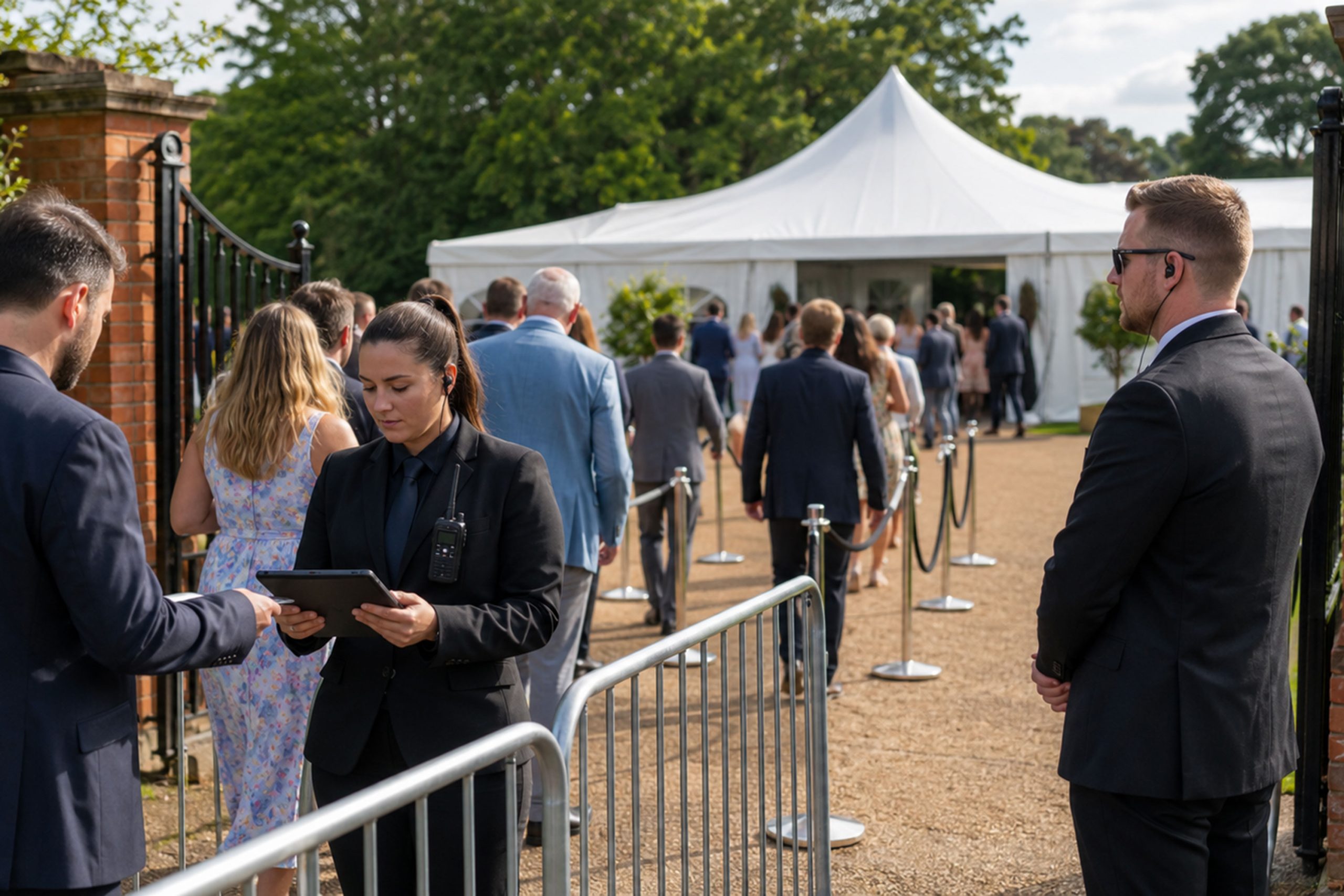
Poor queue management, inconsistent searching or slow responses to low-level issues can damage guest confidence long before a serious incident occurs.
Event organisers are expected to protect people, manage entry, maintain a professional guest experience and respond calmly when plans change. Good event security is not only about responding to incidents; it is about creating a safe, well-run environment that protects the event, the client and the wider brand.
Visible, customer-focused security helps clients protect the standard of the event as well as the safety of attendees, suppliers and staff.
Where organisers often lose control
For premium venues and corporate clients, professionalism in tone and presentation matters just as much as technical competence.
- Define the outcome of the service early, including deterrence, guest reassurance, access control, incident response and protection of brand standards.
- Map audience movement carefully, paying close attention to entry, exit, queue build-up, welfare points and any area likely to become congested.
- Make sure the briefing covers customer service as well as security duties, so the tone of the team matches the event environment.
- Use clear reporting and supervision to maintain standards throughout the event rather than relying on assumptions once guests arrive.
What good delivery looks like
This is why many clients benefit from linking event security, crowd management and visitor management rather than treating them as separate decisions.
Buyers usually get the best result when expectations are clear from the start. That means defining priorities, agreeing reporting standards and making sure the service reflects how the site or event actually operates. Security should never feel generic when the risks, audiences and operational pressures are specific.
In practical terms, good delivery is visible, proportionate and well managed. It protects people and property while supporting the wider experience of staff, visitors, guests, residents, contractors or members of the public. It also creates a stronger paper trail when incidents occur, which can help with reviews, accountability and insurance questions.
How McKenzie Arnold Group can support you
McKenzie Arnold Group supports organisers with structured event security, experienced teams, practical planning input and a customer-focused approach that helps events feel safe and well run. Where required, the business can also support wider event management and guest journey considerations so security is aligned with the event as a whole.
If you are reviewing your requirements, the next sensible step is to explore the relevant service pages for event security and then crowd management. A short conversation at the planning stage often makes it easier to scope a realistic, proportionate solution.
Frequently asked questions
When should event security planning begin?
As early as possible. Early planning gives organisers time to assess risk, define staffing requirements, coordinate suppliers and avoid expensive last-minute changes.
What should organisers prepare before speaking to a security provider?
Useful information includes event type, expected attendance, venue layout, access points, timings, alcohol profile, VIP considerations and any known concerns around crowd behaviour or public safety.
Need support with professional event security? Contact McKenzie Arnold Group on 01376 350 999, email info@mckenziearnold.com or use the contact page to discuss your requirements.
Event Security Risk Assessments for Summer Events: What Organisers Should Cover
Event Security Risk Assessments for Summer Events: What Organisers Should Cover
The best summer event risk assessments cover crowd flow, heat-related welfare, access routes, contractors, licensing conditions and how incidents will be communicated on the day.
Event organisers are expected to protect people, manage entry, maintain a professional guest experience and respond calmly when plans change. Good event security is not only about responding to incidents. It is more about creating a safe, well-run environment that protects the event, the client and the wider brand.
Organisers who plan early are better placed to allocate the right number of staff, build realistic queue plans and brief teams properly before the first guest arrives.
Where organisers often lose control
A proportionate security plan should take account of audience profile, alcohol, weather exposure, temporary structures and any high-pressure points around entry or exit.
- Define the outcome of the service early, including deterrence, guest reassurance, access control, incident response and protection of brand standards.
- Map audience movement carefully, paying close attention to entry, exit, queue build-up, welfare points and any area likely to become congested.
- Make sure the briefing covers customer service as well as security duties, so the tone of the team matches the event environment.
- Use clear reporting and supervision to maintain standards throughout the event rather than relying on assumptions once guests arrive.
What good delivery looks like
This is why many clients benefit from linking event security, crowd management and visitor management rather than treating them as separate decisions.
Buyers usually get the best result when expectations are clear from the start. That means defining priorities, agreeing reporting standards and making sure the service reflects how the site or event actually operates. Security should never feel generic when the risks, audiences and operational pressures are specific.
In practical terms, good delivery is visible, proportionate and well managed. It protects people and property while supporting the wider experience of staff, visitors, guests, residents, contractors or members of the public. It also creates a stronger paper trail when incidents occur, which can help with reviews, accountability and insurance questions.
How McKenzie Arnold Group can support you
McKenzie Arnold Group supports organisers with structured event security, experienced teams, practical planning input and a customer-focused approach. This helps events feel safe and well run. Where required, the business can also support wider event management and guest journey considerations so security is aligned with the event as a whole.
If you are reviewing your requirements, the next sensible step is to explore the relevant service pages for event security and then crowd management. A short conversation at the planning stage often makes it easier to scope a realistic, proportionate solution.
Frequently asked questions
When should event security planning begin?
As early as possible. Early planning gives organisers time to assess risk, define staffing requirements, coordinate suppliers and avoid expensive last-minute changes.
What should organisers prepare before speaking to a security provider?
Useful information includes event type, expected attendance, venue layout, access points, timings, alcohol profile, VIP considerations and any known concerns around crowd behaviour or public safety.
Need support with event security risk assessment? Contact McKenzie Arnold Group on 01376 350 999, email info@mckenziearnold.com or use the contact page to discuss your requirements.
Security Planning for Airshows, Carnivals and Parades
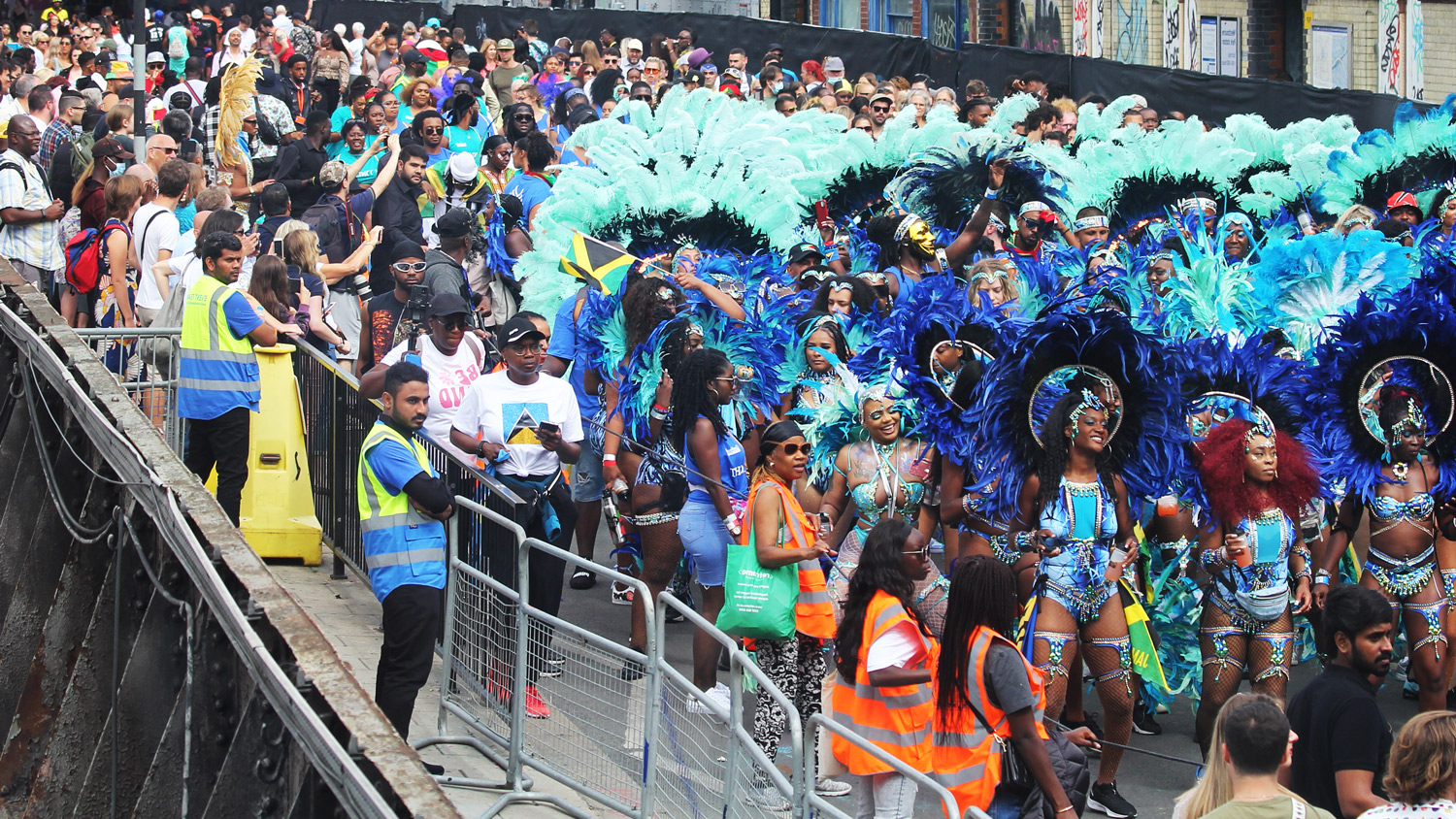
A one-size-fits-all model rarely works. In practice, parade security planning needs to reflect the way people move through the space, the kind of incidents most likely to occur and the standard of customer experience the client wants to protect. Crowd management depends on understanding movement, pressure points, ingress and egress, welfare considerations and the practical behaviour of large groups in real time. It protects brand and reputation as well as people and property, because guests remember how safe, organised and professional a venue or event feels. It also explains why experienced delivery teams spend as much time on planning and briefing as they do on live deployment.
Typical risks in this environment
In practical terms, parade security planning should be shaped around the people using the space, the pace of the operation and the consequences of failure. Entry points, circulation routes, staffing levels, vulnerable areas, contractor activity, high-value assets and expected behaviour all influence what the right plan looks like. Strong delivery does not rely on guesswork; it relies on a clear operating picture and a team that understands how to act within it.
Clients tend to get better results when they define the purpose of the service early. Is the priority deterrence, public reassurance, traffic flow, guest handling, loss prevention, incident escalation, asset protection or a blend of several outcomes? Once those priorities are clear, deployment becomes far easier to design and measure.
What a proportionate response looks like
- Deploy people where visibility, reassurance and intervention will make the biggest difference.
- Use access control and public communication to reduce friction before it turns into an incident.
- Maintain strong supervision so standards remain consistent throughout the operation.
- Record issues clearly and review patterns so the service improves over time.
- Match the tone of the security presence to the audience, venue and brand environment.
How McKenzie Arnold Group supports delivery
McKenzie Arnold Group is well placed to support this kind of requirement because the business already delivers integrated visitor management, security and stewarding services across a wide range of environments. The website’s service structure shows dedicated capability across security services, visitor management, event security, crowd management, hospitality, event management, close protection and sector-specific solutions, giving clients a practical route from planning through to delivery.
For organisations exploring parade security planning, it is often useful to connect the topic to adjacent services rather than treating it in isolation. For example, a safer operation may also depend on visitor management, crowd movement, front-of-house hosting, licensed staff or joined-up event management. That is why related internal links and service pathways matter in both user journeys and SEO.
Useful next steps include reviewing the relevant service page and, where appropriate, exploring a related McKenzie Arnold Group solution.
Frequently asked questions
What makes a security plan effective?
A strong plan is specific to the environment, clear about responsibilities, realistic about resources and supported by briefing, supervision and communication throughout the operation.
How do you reduce disruption while increasing security?
By matching the security approach to the genuine risk profile, designing sensible entry and circulation routes, and using trained teams who can manage people with confidence.
Complex moving crowds need proactive planning, rehearsed routes and confident supervision. The strongest outcomes usually come from clear objectives, early planning and a team that can adapt professionally once the operation goes live.
Security for Christmas Markets and Seasonal Events Starts Months Earlier Than You Think
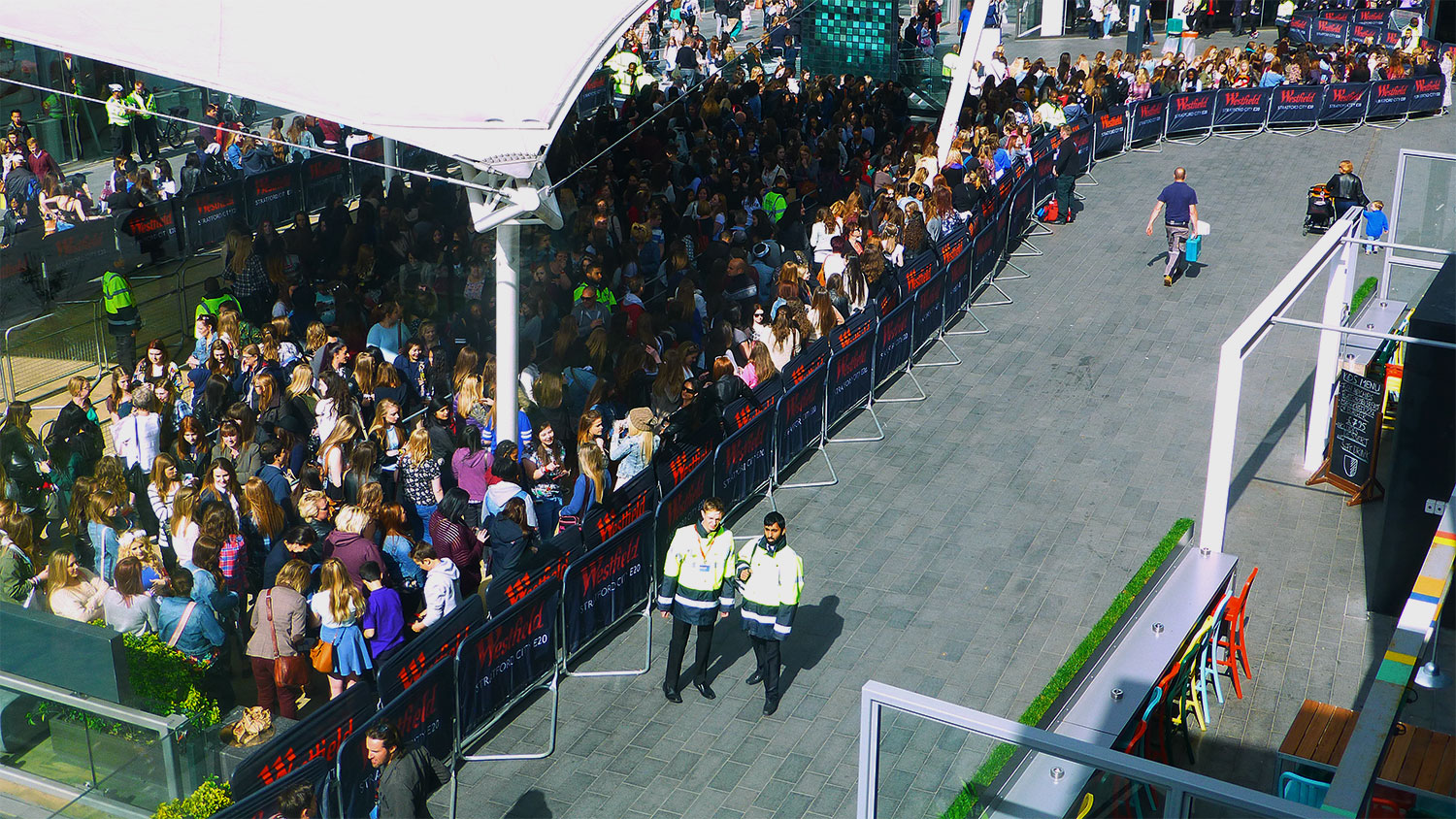
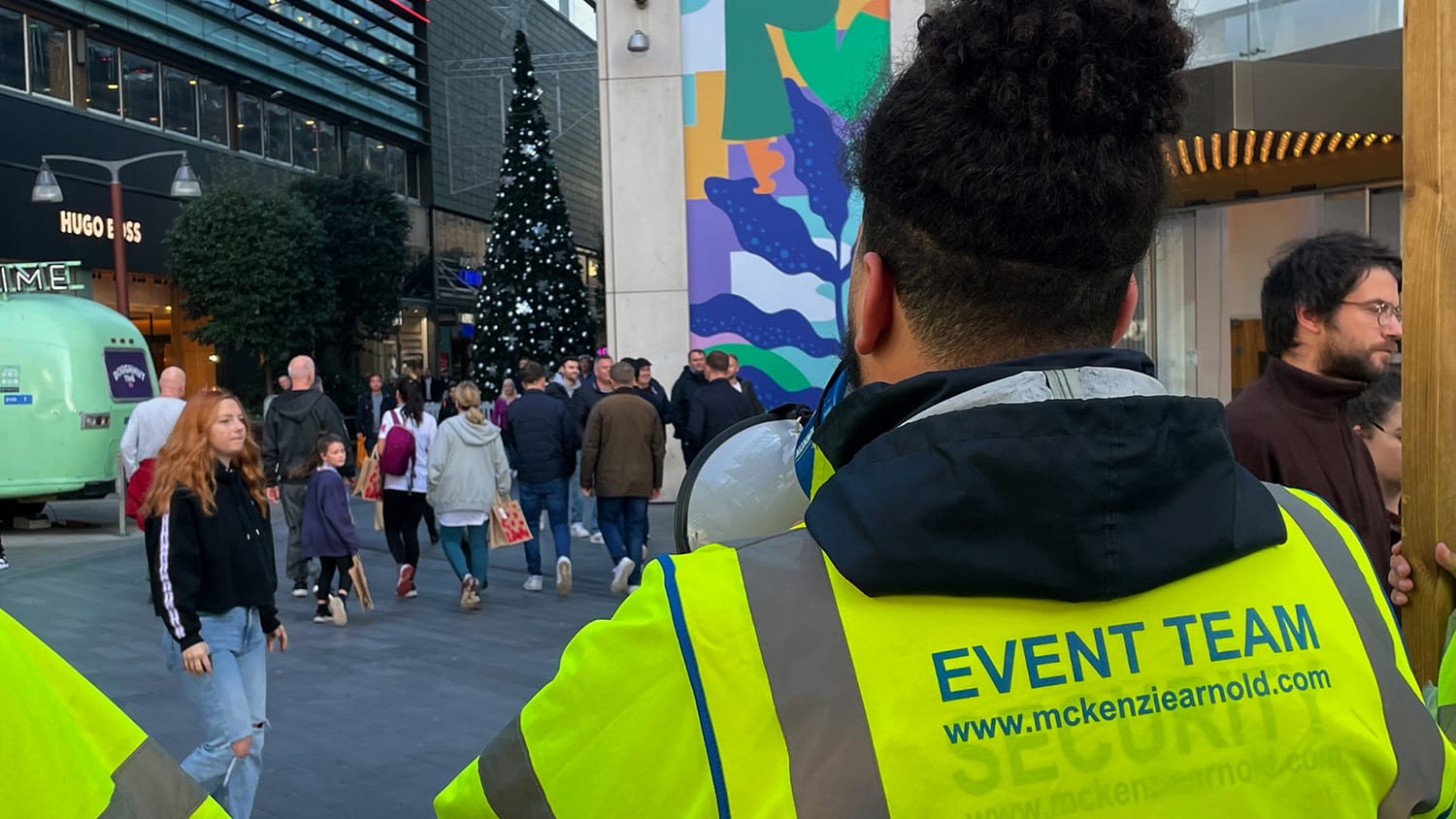
Every environment brings its own pressure points, and christmas market security is no different. The right approach depends on visitor profile, venue layout, operating hours, asset value and the level of public interaction involved. A modern event security model usually combines planning, access control, public reassurance, escalation routes, incident response and post-event review. It supports smoother daily operations by reducing uncertainty at entry points, improving communication and helping teams react faster when conditions change. This is why early collaboration between client teams, venue teams and security leads matters so much.
Typical risks in this environment
In practical terms, christmas market security should be shaped around the people using the space, the pace of the operation and the consequences of failure. Entry points, circulation routes, staffing levels, vulnerable areas, contractor activity, high-value assets and expected behaviour all influence what the right plan looks like. Strong delivery does not rely on guesswork; it relies on a clear operating picture and a team that understands how to act within it.
Clients tend to get better results when they define the purpose of the service early. Is the priority deterrence, public reassurance, traffic flow, guest handling, loss prevention, incident escalation, asset protection or a blend of several outcomes? Once those priorities are clear, deployment becomes far easier to design and measure.
What a proportionate response looks like
- Deploy people where visibility, reassurance and intervention will make the biggest difference.
- Use access control and public communication to reduce friction before it turns into an incident.
- Maintain strong supervision so standards remain consistent throughout the operation.
- Record issues clearly and review patterns so the service improves over time.
- Match the tone of the security presence to the audience, venue and brand environment.
How McKenzie Arnold Group supports delivery
McKenzie Arnold Group is well placed to support this kind of requirement because the business already delivers integrated visitor management, security and stewarding services across a wide range of environments. The website’s service structure shows dedicated capability across security services, visitor management, event security, crowd management, hospitality, event management, close protection and sector-specific solutions, giving clients a practical route from planning through to delivery.
For organisations exploring christmas market security, it is often useful to connect the topic to adjacent services rather than treating it in isolation. For example, a safer operation may also depend on visitor management, crowd movement, front-of-house hosting, licensed staff or joined-up event management. That is why related internal links and service pathways matter in both user journeys and SEO.
Useful next steps include reviewing the relevant service page and, where appropriate, exploring a related McKenzie Arnold Group solution.
Frequently asked questions
When should security planning begin?
Ideally at the earliest practical stage, once scope, venue and audience profile start to become clear. Early involvement helps shape staffing, access control, public flow and contingency planning before bad habits become fixed.
Why does customer service matter in security?
Because many security roles are public-facing. Calm communication, confidence and professionalism help prevent friction, improve compliance and protect the guest experience.
Seasonal events succeed when safety planning is built into the programme from day one. The strongest outcomes usually come from clear objectives, early planning and a team that can adapt professionally once the operation goes live.
Security for Product Launches and Brand Activations
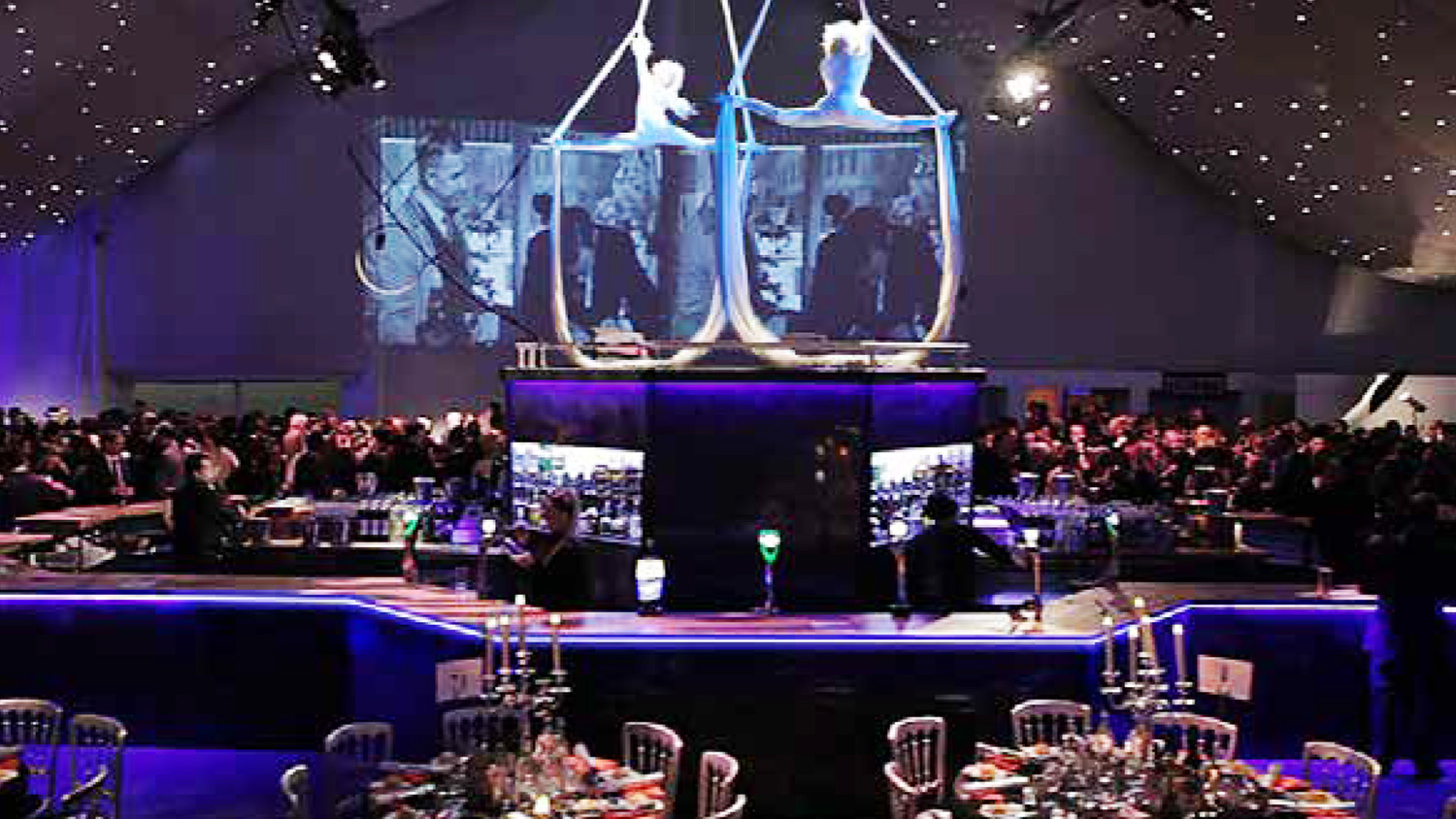
Every environment brings its own pressure points, and product launch security is no different. The right approach depends on visitor profile, venue layout, operating hours, asset value and the level of public interaction involved. Hospitality environments need visible control delivered in a way that still feels welcoming, polished and proportionate to the setting. It protects brand and reputation as well as people and property, because guests remember how safe, organised and professional a venue or event feels. It also explains why experienced delivery teams spend as much time on planning and briefing as they do on live deployment.
Typical risks in this environment
In practical terms, product launch security should be shaped around the people using the space, the pace of the operation and the consequences of failure. Entry points, circulation routes, staffing levels, vulnerable areas, contractor activity, high-value assets and expected behaviour all influence what the right plan looks like. Strong delivery does not rely on guesswork; it relies on a clear operating picture and a team that understands how to act within it.
Clients tend to get better results when they define the purpose of the service early. Is the priority deterrence, public reassurance, traffic flow, guest handling, loss prevention, incident escalation, asset protection or a blend of several outcomes? Once those priorities are clear, deployment becomes far easier to design and measure.
What a proportionate response looks like
- Deploy people where visibility, reassurance and intervention will make the biggest difference.
- Use access control and public communication to reduce friction before it turns into an incident.
- Maintain strong supervision so standards remain consistent throughout the operation.
- Record issues clearly and review patterns so the service improves over time.
- Match the tone of the security presence to the audience, venue and brand environment.
How McKenzie Arnold Group supports delivery
McKenzie Arnold Group is well placed to support this kind of requirement because the business already delivers integrated visitor management, security and stewarding services across a wide range of environments. The website’s service structure shows dedicated capability across security services, visitor management, event security, crowd management, hospitality, event management, close protection and sector-specific solutions, giving clients a practical route from planning through to delivery.
For organisations exploring product launch security, it is often useful to connect the topic to adjacent services rather than treating it in isolation. For example, a safer operation may also depend on visitor management, crowd movement, front-of-house hosting, licensed staff or joined-up event management. That is why related internal links and service pathways matter in both user journeys and SEO.
Useful next steps include reviewing the relevant service page and, where appropriate, exploring a related McKenzie Arnold Group solution.
Frequently asked questions
Why does customer service matter in security?
Because many security roles are public-facing. Calm communication, confidence and professionalism help prevent friction, improve compliance and protect the guest experience.
When should security planning begin?
Ideally at the earliest practical stage, once scope, venue and audience profile start to become clear. Early involvement helps shape staffing, access control, public flow and contingency planning before bad habits become fixed.
Protect your brand moment with security that feels polished, prepared and proportionate. The strongest outcomes usually come from clear objectives, early planning and a team that can adapt professionally once the operation goes live.
VIP Guest Security and Close Protection at Live Events
Every environment brings its own pressure points, and vip event security is no different. The right approach depends on visitor profile, venue layout, operating hours, asset value and the level of public interaction involved. Close protection is most effective when it stays discreet, intelligence-led and fully coordinated with venue operations and travel plans. It improves confidence for staff, clients, attendees and contractors because everyone can see who is responsible, where to go and how issues will be handled. That is where a joined-up security and visitor experience becomes valuable.
Typical risks in this environment
In practical terms, vip event security should be shaped around the people using the space, the pace of the operation and the consequences of failure. Entry points, circulation routes, staffing levels, vulnerable areas, contractor activity, high-value assets and expected behaviour all influence what the right plan looks like. Strong delivery does not rely on guesswork; it relies on a clear operating picture and a team that understands how to act within it.
Clients tend to get better results when they define the purpose of the service early. Is the priority deterrence, public reassurance, traffic flow, guest handling, loss prevention, incident escalation, asset protection or a blend of several outcomes? Once those priorities are clear, deployment becomes far easier to design and measure.
What a proportionate response looks like
- Deploy people where visibility, reassurance and intervention will make the biggest difference.
- Use access control and public communication to reduce friction before it turns into an incident.
- Maintain strong supervision so standards remain consistent throughout the operation.
- Record issues clearly and review patterns so the service improves over time.
- Match the tone of the security presence to the audience, venue and brand environment.
How McKenzie Arnold Group supports delivery
McKenzie Arnold Group is well placed to support this kind of requirement because the business already delivers integrated visitor management, security and stewarding services across a wide range of environments. The website’s service structure shows dedicated capability across security services, visitor management, event security, crowd management, hospitality, event management, close protection and sector-specific solutions, giving clients a practical route from planning through to delivery.
For organisations exploring vip event security, it is often useful to connect the topic to adjacent services rather than treating it in isolation. For example, a safer operation may also depend on visitor management, crowd movement, front-of-house hosting, licensed staff or joined-up event management. That is why related internal links and service pathways matter in both user journeys and SEO.
Useful next steps include reviewing the relevant service page and, where appropriate, exploring a related McKenzie Arnold Group solution.
Frequently asked questions
When should security planning begin?
Ideally at the earliest practical stage, once scope, venue and audience profile start to become clear. Early involvement helps shape staffing, access control, public flow and contingency planning before bad habits become fixed.
Why does customer service matter in security?
Because many security roles are public-facing. Calm communication, confidence and professionalism help prevent friction, improve compliance and protect the guest experience.
Coordinate VIP security with arrival routes, hosting and venue operations from the start. The strongest outcomes usually come from clear objectives, early planning and a team that can adapt professionally once the operation goes live.
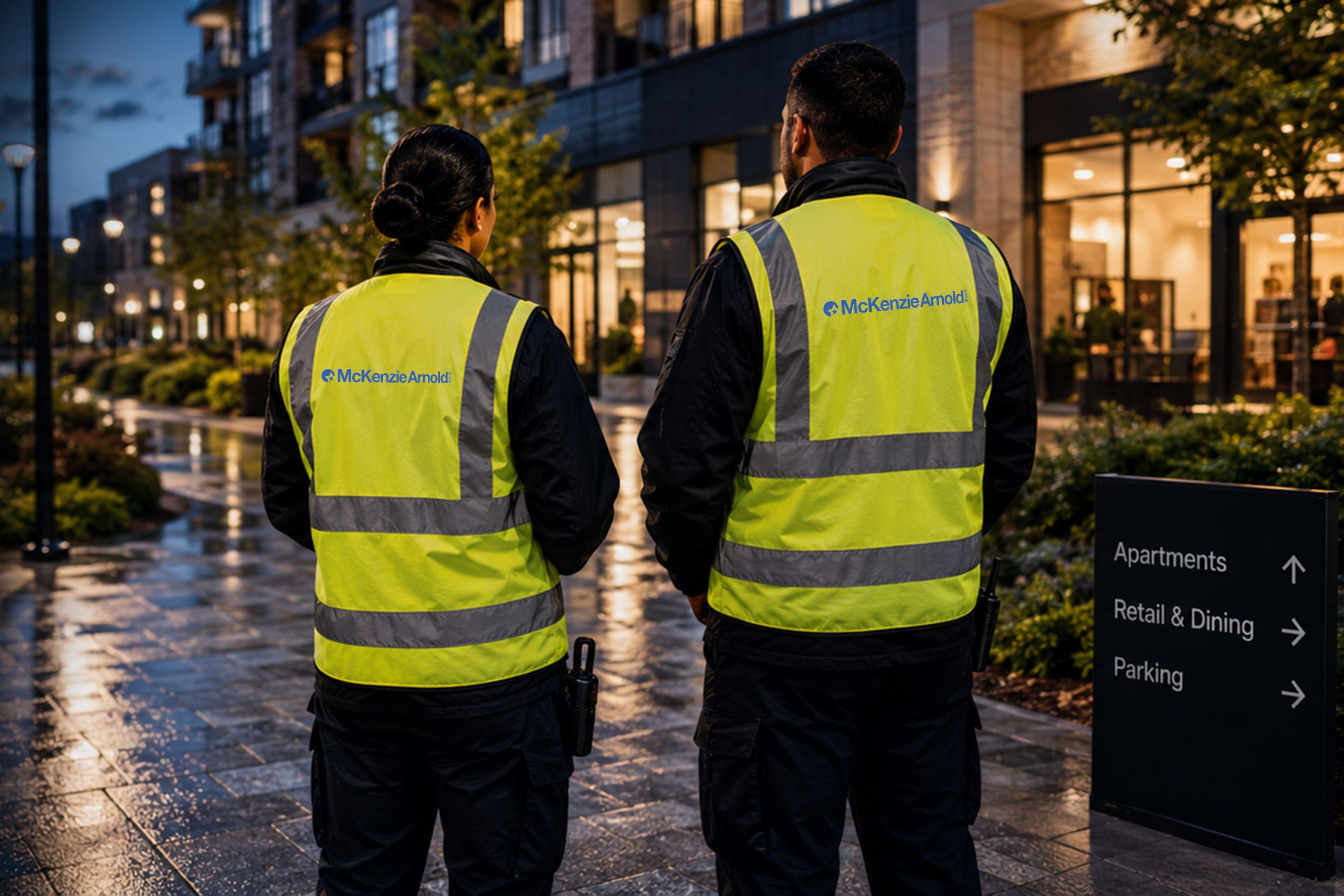
Anti-Social Behaviour Security for Residential Developments and Mixed-Use Sites
A one-size-fits-all model rarely works. In practice, anti social behaviour security needs to reflect the way people move through the space, the kind of incidents most likely to occur and the standard of customer experience the client wants to protect. For corporate locations, the goal is to protect people, property and continuity without making daily business activity feel heavy-handed or inconvenient. It improves confidence for staff, clients, attendees and contractors because everyone can see who is responsible, where to go and how issues will be handled. That is where a joined-up security and visitor experience becomes valuable.
Typical risks in this environment
In practical terms, anti social behaviour security should be shaped around the people using the space, the pace of the operation and the consequences of failure. Entry points, circulation routes, staffing levels, vulnerable areas, contractor activity, high-value assets and expected behaviour all influence what the right plan looks like. Strong delivery does not rely on guesswork; it relies on a clear operating picture and a team that understands how to act within it.
Clients tend to get better results when they define the purpose of the service early. Is the priority deterrence, public reassurance, traffic flow, guest handling, loss prevention, incident escalation, asset protection or a blend of several outcomes? Once those priorities are clear, deployment becomes far easier to design and measure.
What a proportionate response looks like
- Deploy people where visibility, reassurance and intervention will make the biggest difference.
- Use access control and public communication to reduce friction before it turns into an incident.
- Maintain strong supervision so standards remain consistent throughout the operation.
- Record issues clearly and review patterns so the service improves over time.
- Match the tone of the security presence to the audience, venue and brand environment.
How McKenzie Arnold Group supports delivery
McKenzie Arnold Group is well placed to support this kind of requirement because the business already delivers integrated visitor management, security and stewarding services across a wide range of environments. The website’s service structure shows dedicated capability across security services, visitor management, event security, crowd management, hospitality, event management, close protection and sector-specific solutions, giving clients a practical route from planning through to delivery.
For organisations exploring anti social behaviour security, it is often useful to connect the topic to adjacent services rather than treating it in isolation. For example, a safer operation may also depend on visitor management, crowd movement, front-of-house hosting, licensed staff or joined-up event management. That is why related internal links and service pathways matter in both user journeys and SEO.
Useful next steps include reviewing the relevant service page and, where appropriate, exploring a related McKenzie Arnold Group solution.
Frequently asked questions
What makes a security plan effective?
A strong plan is specific to the environment, clear about responsibilities, realistic about resources and supported by briefing, supervision and communication throughout the operation.
How do you reduce disruption while increasing security?
By matching the security approach to the genuine risk profile, designing sensible entry and circulation routes, and using trained teams who can manage people with confidence.
Talk to us about a security presence that reduces ASB while supporting residents and site teams. The strongest outcomes usually come from clear objectives, early planning and a team that can adapt professionally once the operation goes live.
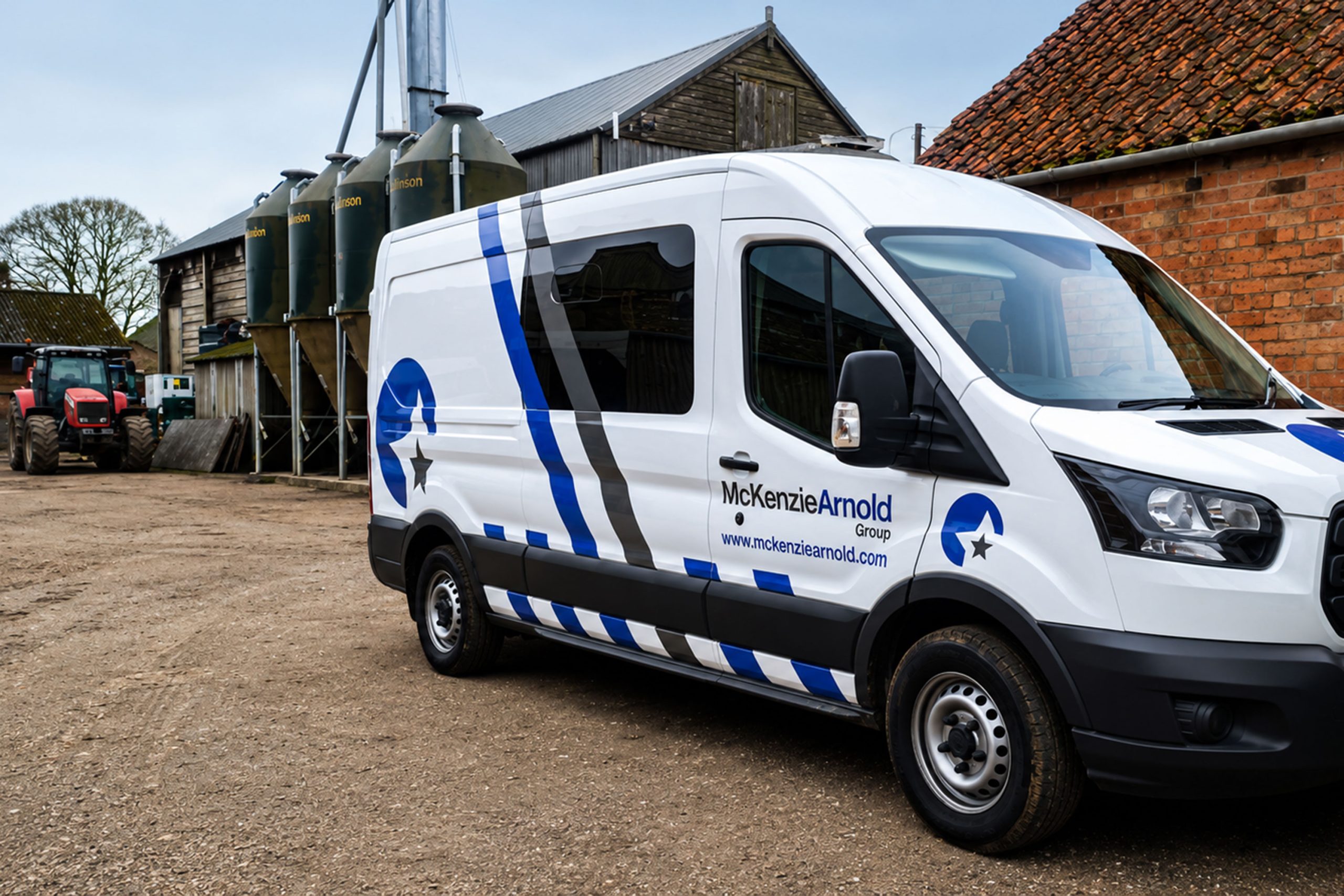
Farm Theft Prevention and Rural Patrol Strategies That Actually Work
Every environment brings its own pressure points, and farm theft prevention is no different. The right approach depends on visitor profile, venue layout, operating hours, asset value and the level of public interaction involved. Rural sites often deal with wide perimeters, lower natural surveillance and valuable mobile assets, all of which call for a practical, tailored security approach. It protects brand and reputation as well as people and property, because guests remember how safe, organised and professional a venue or event feels. It also explains why experienced delivery teams spend as much time on planning and briefing as they do on live deployment.
Typical risks in this environment
In practical terms, farm theft prevention should be shaped around the people using the space, the pace of the operation and the consequences of failure. Entry points, circulation routes, staffing levels, vulnerable areas, contractor activity, high-value assets and expected behaviour all influence what the right plan looks like. Strong delivery does not rely on guesswork; it relies on a clear operating picture and a team that understands how to act within it.
Clients tend to get better results when they define the purpose of the service early. Is the priority deterrence, public reassurance, traffic flow, guest handling, loss prevention, incident escalation, asset protection or a blend of several outcomes? Once those priorities are clear, deployment becomes far easier to design and measure.
What a proportionate response looks like
- Deploy people where visibility, reassurance and intervention will make the biggest difference.
- Use access control and public communication to reduce friction before it turns into an incident.
- Maintain strong supervision so standards remain consistent throughout the operation.
- Record issues clearly and review patterns so the service improves over time.
- Match the tone of the security presence to the audience, venue and brand environment.
How McKenzie Arnold Group supports delivery
McKenzie Arnold Group is well placed to support this kind of requirement because the business already delivers integrated visitor management, security and stewarding services across a wide range of environments. The website’s service structure shows dedicated capability across security services, visitor management, event security, crowd management, hospitality, event management, close protection and sector-specific solutions, giving clients a practical route from planning through to delivery.
For organisations exploring farm theft prevention, it is often useful to connect the topic to adjacent services rather than treating it in isolation. For example, a safer operation may also depend on visitor management, crowd movement, front-of-house hosting, licensed staff or joined-up event management. That is why related internal links and service pathways matter in both user journeys and SEO.
Useful next steps include reviewing the relevant service page and, where appropriate, exploring a related McKenzie Arnold Group solution.
Frequently asked questions
When should security planning begin?
Ideally at the earliest practical stage, once scope, venue and audience profile start to become clear. Early involvement helps shape staffing, access control, public flow and contingency planning before bad habits become fixed.
Why does customer service matter in security?
Because many security roles are public-facing. Calm communication, confidence and professionalism help prevent friction, improve compliance and protect the guest experience.
Strengthen deterrence with a visible rural security plan and practical reporting process. The strongest outcomes usually come from clear objectives, early planning and a team that can adapt professionally once the operation goes live.